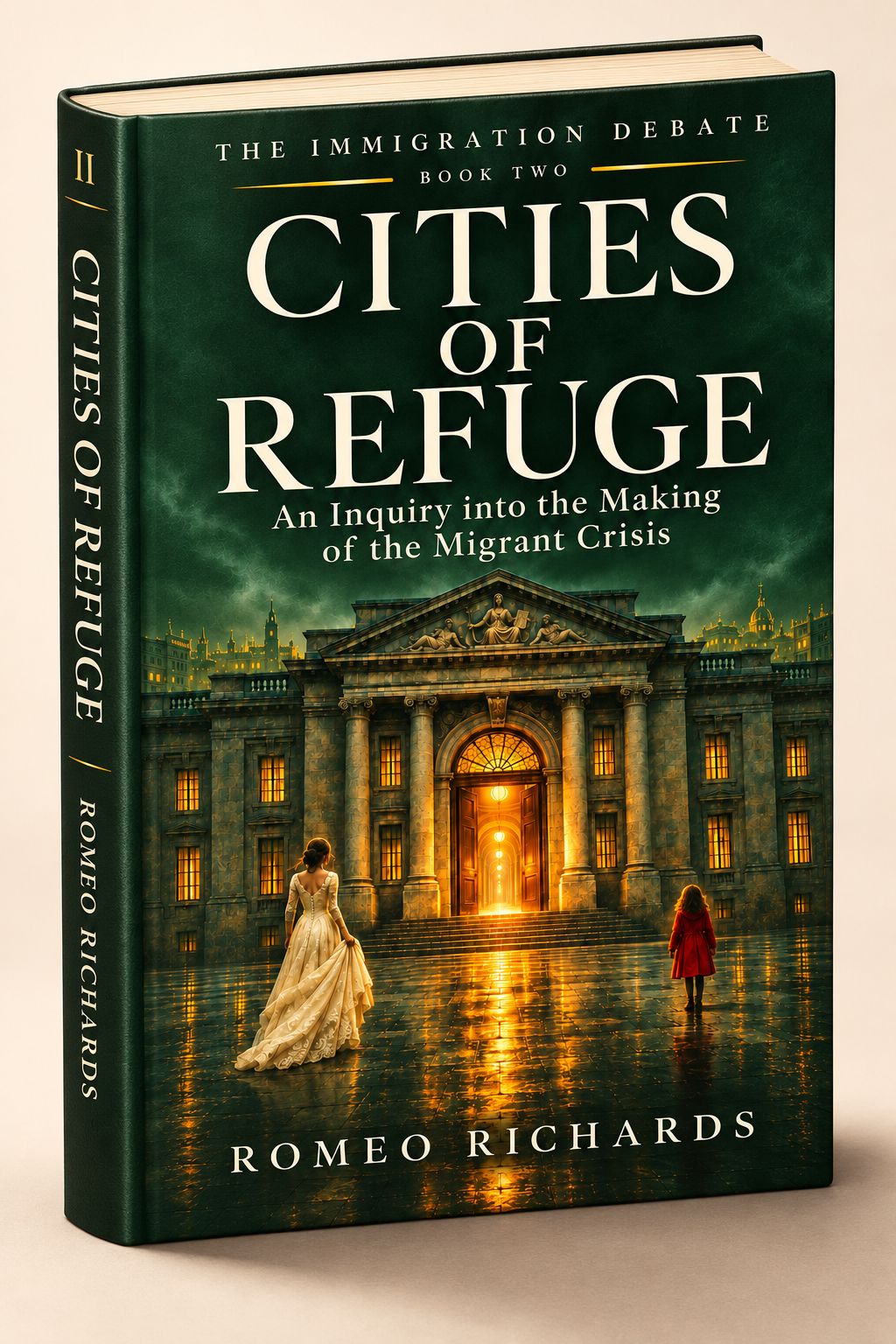
A bride in the Channel. A child in Manchester. Three books following the human lives, political decisions and economic failures behind the immigration debate.
An inquiry into leadership, institutions and economic choices, asking what a functioning country does differently and who must answer when systems fail.
“Who did this to my town, my wages, my hospital, my children’s chances?”
The pressure people feel is real. These books follow that pressure back to the decisions that created it, and ask what would actually improve everyday life.
The patient waiting for an appointment needs a service that works. A national staffing percentage is little comfort when the local appointment is unavailable.
Insecure work, weak pay and limited opportunities can make the future feel smaller. The costs of economic change can be concentrated in particular towns and occupations.
A rich past does not maintain a country’s future. Each generation must develop the people, enterprises, services and infrastructure that enable it to earn a living.
The central question is why institutions stop making that renewal possible.
Writing about the decisions that reach ordinary lives.
The Immigration Debate brings together human stories, historical inquiry and the Theory of National Development. Its concern is how societies create prosperity, how they fail their people, and how those failures become accusations against somebody else.
Written for the reader asking a reasonable question about their town, their family and their future, the trilogy seeks an explanation that can lead to practical repair.
Bring your objections.
The argument should be able to answer them.
Can immigration put pressure on housing and services?
Yes. People need homes, education, healthcare and infrastructure. The books examine that demand alongside newcomers’ contributions, and ask why institutions fail to develop the capacity required. A useful policy must address both.
Is the theory’s solution dependent on immigration?
No. Developing skills, maintaining infrastructure, enabling enterprise and reaching customers are national tasks with or without immigration. The programme of renewal is established before immigration policy is assessed against it.
Do public services count as productive capability?
Teaching, healthcare, research and functioning infrastructure can sustain people’s capabilities and future prosperity. What matters is the quality of the service and the result it delivers, rather than whether the payer is public or private.
Look for a specific obstruction removed, a service that works, an enterprise able to develop, and improvements in people’s incomes and opportunities. Review costs and outcomes, correct failures and keep the people responsible answerable.